
How RadBox works
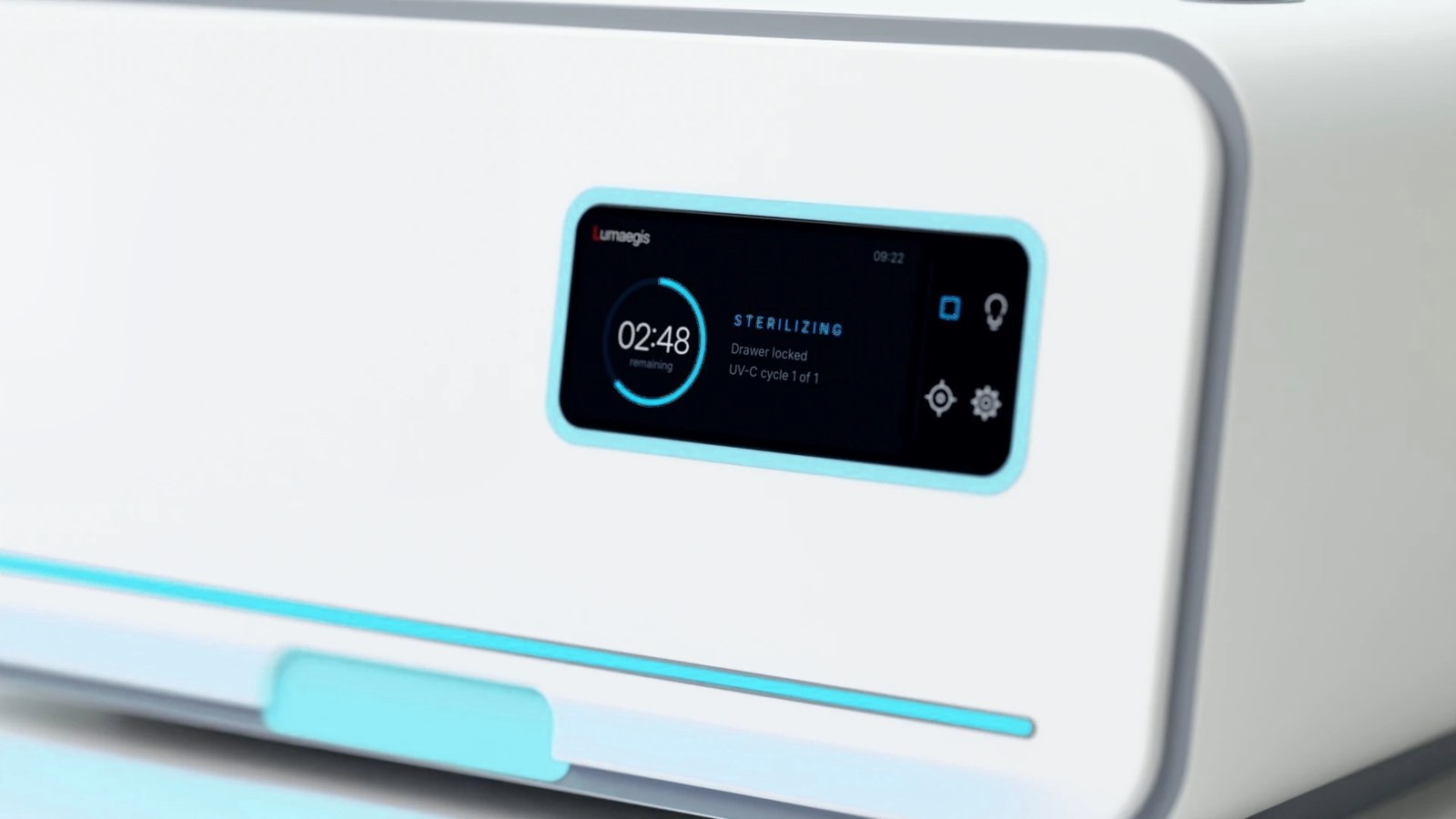
Germicidal light kills on the surface and in shadowed areas. Heat goes where germicidal light can't.
Evidence so far
Real handpiece. Real spores.
Tested with independent labs, ahead of formal FDA validation.
Compared
How RadBox compares with other methods
| Method | Sterilizes | Time | Needs water | Toxic chemicals | Notes |
|---|---|---|---|---|---|
| Steam autoclave | Yes | Hours for a full load; about 52 min for one pouch cycle7 | Yes | No | Wet heat corrodes and wears instruments; pouches and drying |
| Ethylene oxide gas | Yes | Hours to days, including aeration18 | No | Yes | Carcinogenic gas; industrial plants only5 |
| Hydrogen peroxide plasma | Yes | Varies by system | No | Yes | Small capacity; concentrated hydrogen peroxide is hazardous for staff22 |
| UV-C light devices | No, disinfects | Minutes | No | No | Light alone misses shadows and the inside of hollow instruments16 |
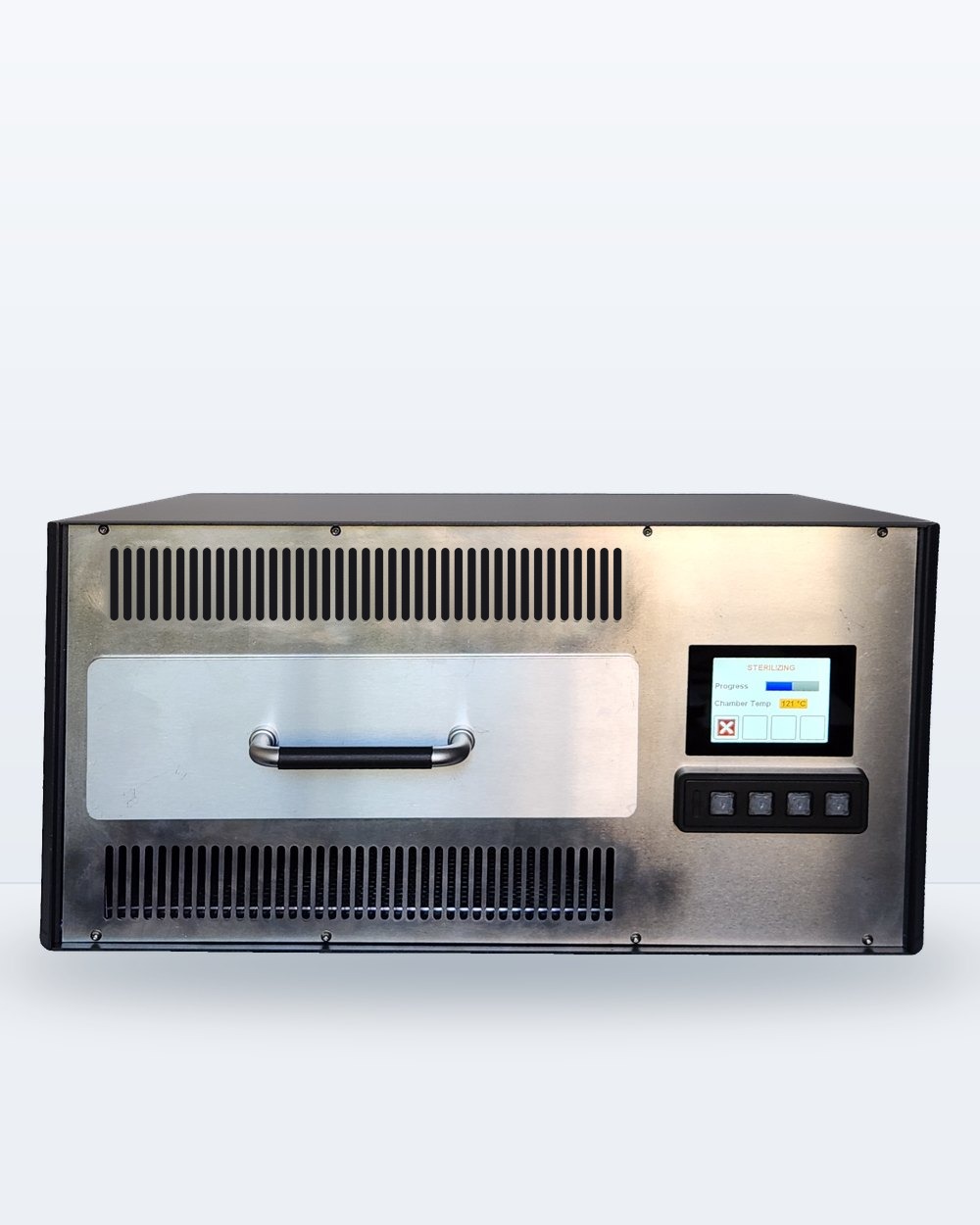
| RadBox | Yes, to SAL 10-6 | Under 10 minutes, then under 10 minutes to cool13 | No | No | Germicidal light plus heat that reaches inside sealed cavities13 |
Cost of ownership
What RadBox could save a practice
About $25,000saved a year per practice versus a Midmark M11.22
$0saved a year with RadBox
$0today
$0RadBox
$0cost per instrument processed, vs $0 today
Annual running cost for a 6-operatory office, purchase price excluded. Lumaegis model.21 RadBox is not yet FDA cleared.