
How RadBox works

Germicidal light kills on the surface and in shadowed areas. Heat goes where germicidal light can't.
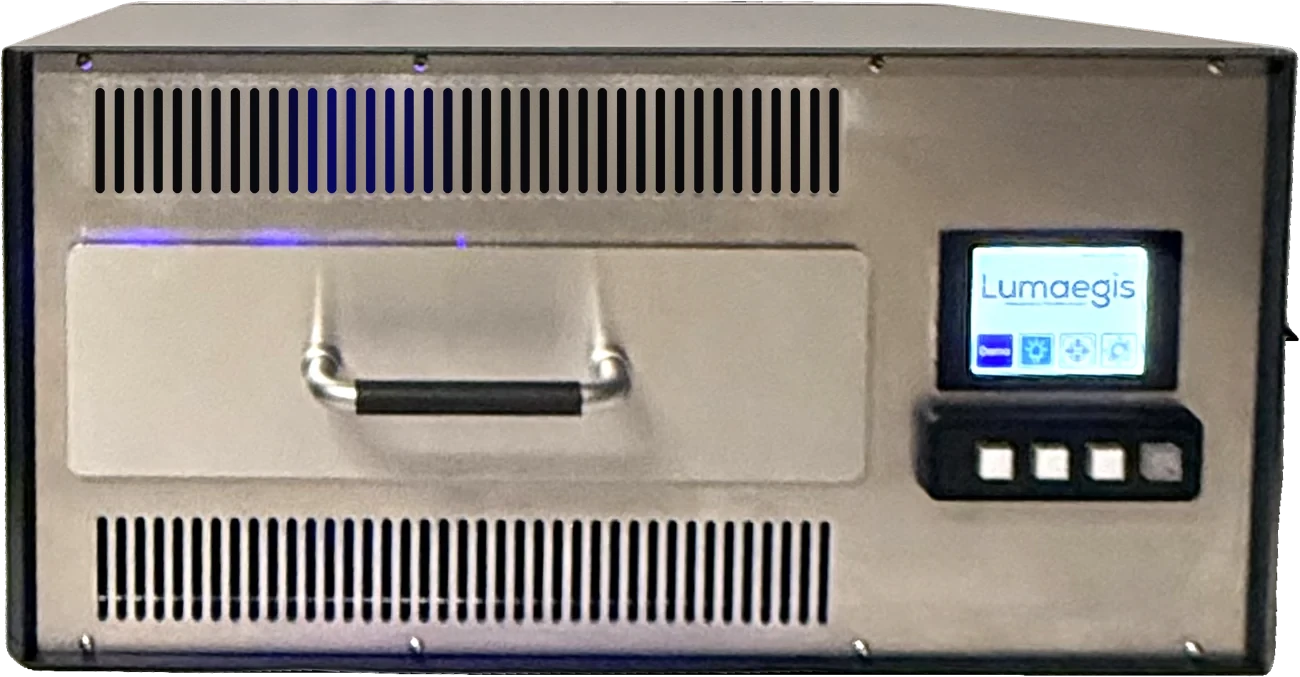
RadBox RB-Z1 sterilizer running a cycle, screen showing chamber temperature
Modality 1

Germicidal light

Over 660 mJ/cm² on direct surfaces in 50 seconds.13

Modality 2

Radiative and conductive heat

Above 121 °C, radiated onto the instrument and conducted through steel into sealed cavities.13

Together

Every surface

Direct, shadowed, lumens and occluded sites, within minutes.13

The race

One sterilization cycle

Steam autoclave
52 min
RadBox
<10 min

Steam: tabletop pouch cycle.7 RadBox: about 9 min with germicidal light and heat combined; heat alone reaches 6-log in about 10.5 min.13

Evidence so far

Real handpiece. Real spores.

Tested with independent labs, ahead of formal FDA validation.
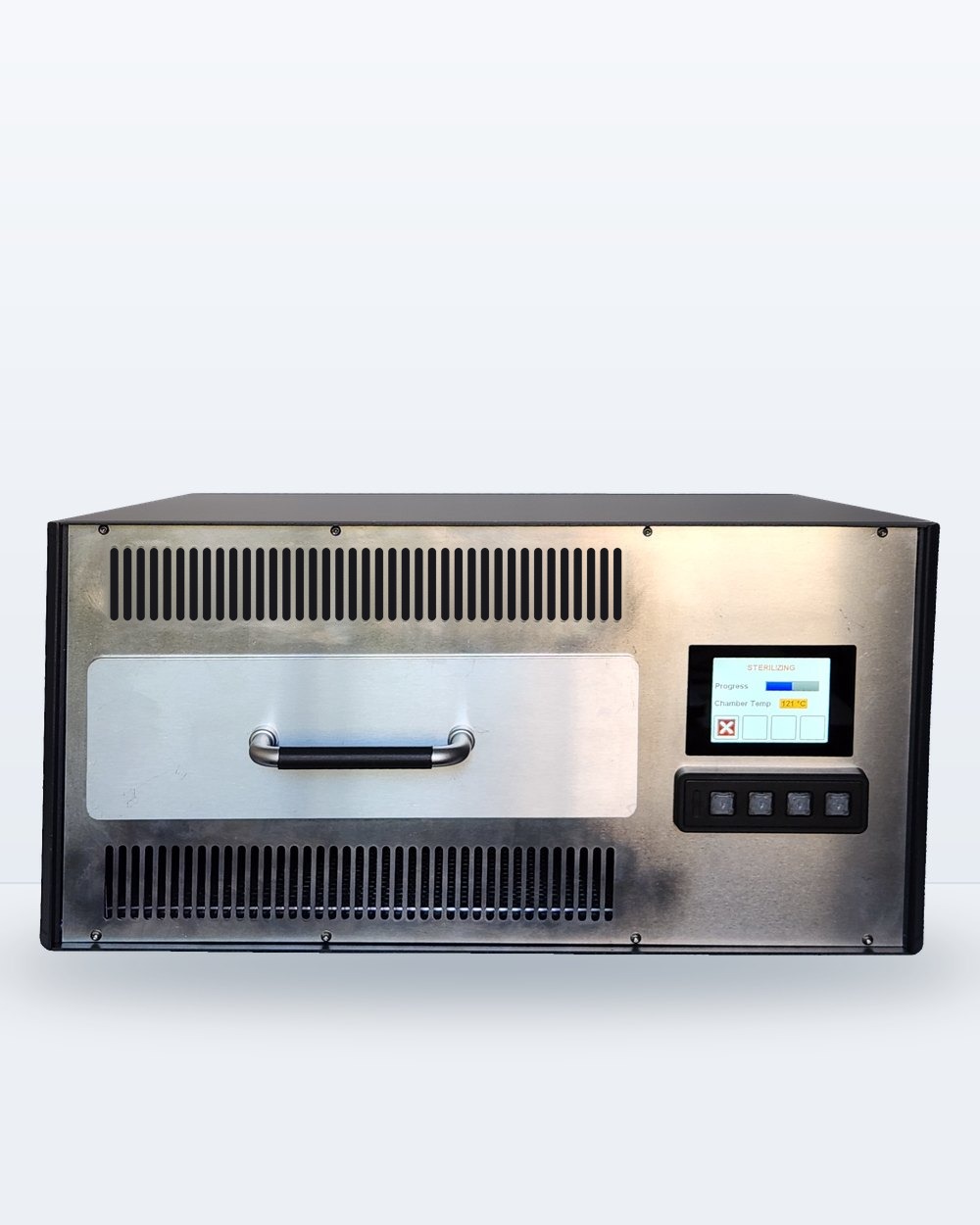
RadBox sterilizer running a cycle
No growth

at hidden challenge sites after 11 days13

>121 °C

inside a sealed cavity in under 9 minutes13

>660 mJ/cm² in 3 min

in shadowed areas where only about 30% of the light gets in13

No growth in 60 s

standard biological indicators, third-party test of an earlier prototype

Cost of ownership

What RadBox could save a practice

About $25,000saved a year per practice, compared with a Midmark M11 steam sterilizer.22 Try your own assumptions below.
$0saved a year with RadBox
$0today
$0RadBox
$0cost per instrument processed, vs $0 today
Annual running cost: maintenance, parts, utilities, water, packaging, installation, HVAC and packaging labor, for a 2,500 sq ft, 6-operatory office. Purchase price excluded. Model and assumptions: Lumaegis.21 RadBox is not yet FDA cleared.