
Clean is not sterile
- Sterilize100%
Kills or inactivates all living microorganisms, including spores
- DisinfectMore than 99.99%
Kills most bacteria and viruses
- SanitizeMore than 99.9%
Kills some bacteria and viruses
- CleanAlways first
Physically removes dirt, debris and some germs
Not all "clean" is the same
Healthcare uses four levels. Each one removes more. Only the last removes everything.16
- Level 1
Clean
Removes visible dirt and many germs.
e.g. Soap and water - Level 2
Sanitize
Cuts germs to a safer level.
e.g. A restaurant table - Level 3
Disinfect
Kills nearly all germs, but not every spore.
e.g. Wiping a hospital surface - Level 4
Sterilize
Kills every form of microbial life, including spores.
e.g. Surgical and dental instruments
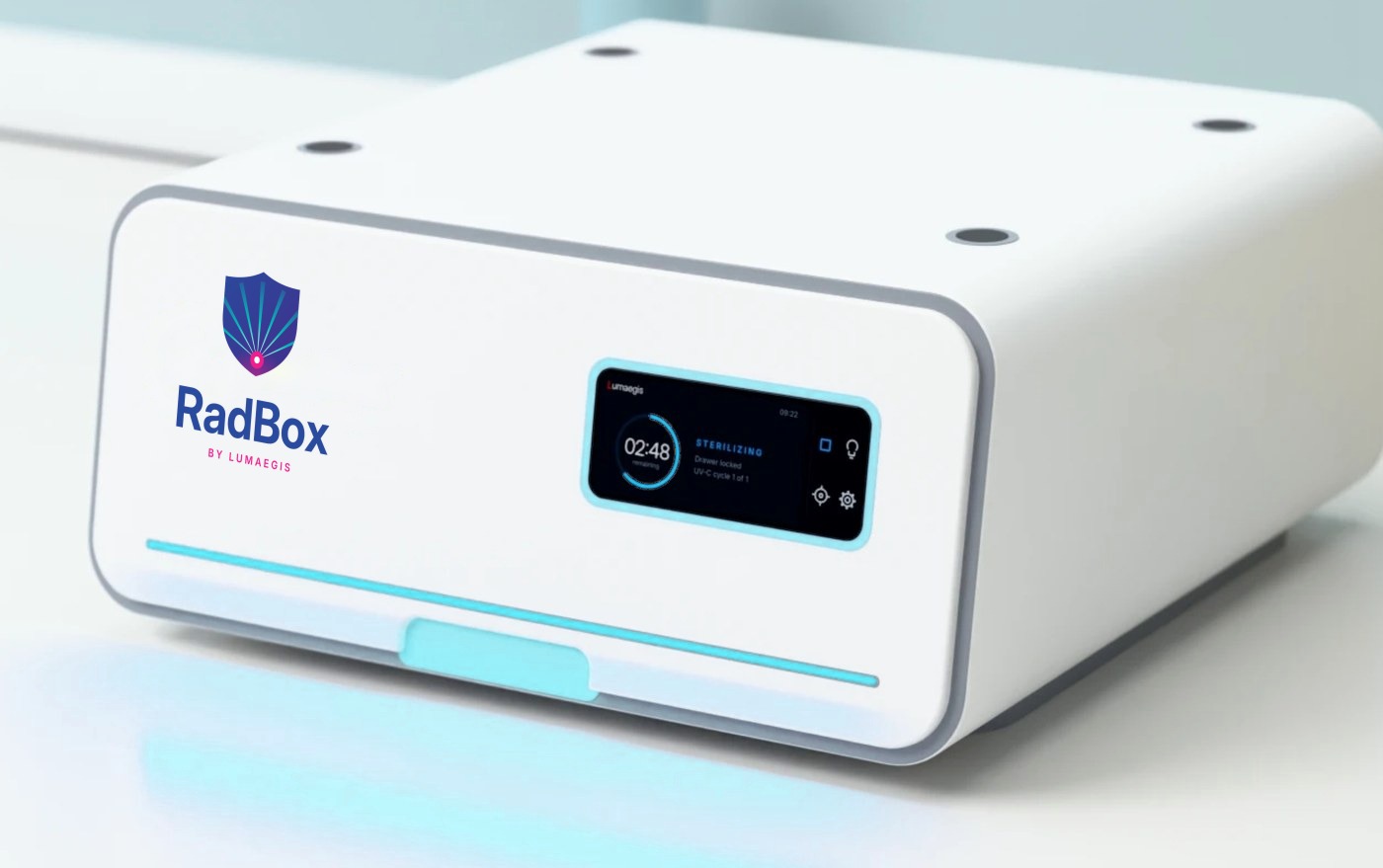 RadBox reaches sterile
The difference between disinfected and sterile is spores.16
The hardest form of life to kill
Some bacteria form spores: an armored state that survives boiling and most disinfectants.
Kill the spore, and everything else is dead too.17
Sterile means nothing survives
Each "log" kills 90% of what is left. Watch a million spores fall to none.
0% killed · spores remaining
Labs find the time to kill a million spores, then double it. That is terminal sterilization: a sterility assurance level of 10-6, where nothing survives.19
- Enters tissue or bloodScalers, surgical instrumentsAlways sterilized
- Touches the mouthMouth mirrors, dental handpiecesSterilize between patients
- Touches skinBlood pressure cuffs, X-ray headsClean and disinfect
Dental handpieces must be sterilized after every patient. Wiping is not enough.20
Sterile is proven, not assumed
RadBox checks every load three ways.
Color-change strip
A chemical indicator inside each tray changes color when conditions are met.
Machine record
Time, temperature and germicidal dose are logged for each load.
Spore test
A biological indicator spore strip goes through a cycle. If nothing grows, the sterilizer works.